

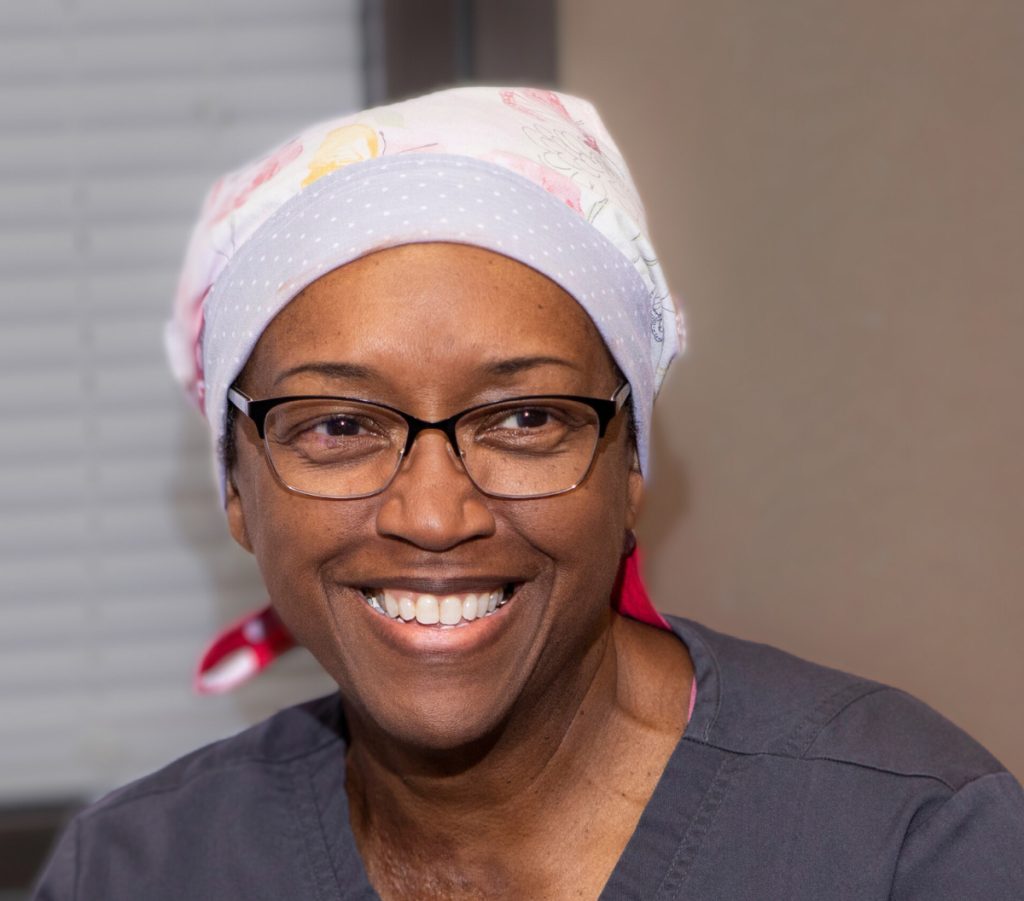
Q&A with Gift of Life Medical Director Gwendolyn Lavalais, MD
From humble beginnings, Gift of Life Medical Director Dr. Gwendolyn Lavalais has built a vibrant and rewarding career. Her perseverance has saved lives and inspired future generations to dream bigger, reach higher, and serve others with purpose. During Black History Month, Gift of Life is proud to recognize and celebrate her professional and personal achievements.
Dr. Lavalais, thank you for sitting down with us and sharing more about your life. You’ve had an impressive career as both an oncologist and the Medical Director of Gift of Life! Have you always dreamed of being a doctor?
(Laughs) No, I really didn’t! I grew up in rural Louisiana during segregation. My parents were sharecroppers of cotton and had a very limited education. Outside of the farming work they did, the only people I saw with careers were teachers. So, those were the only careers I thought were possible.
When did you start considering a career in medicine?
At eight years old I became sick with an undiagnosed illness that forced me to be hospitalized for about a year in a charity hospital about 45 minutes away from home. It was a difficult time in my life. But it also exposed me to a new group of professionals – nurses and doctors – who were kind and took a special interest in me. I thought, “You know, that would be interesting! One day, I want to do that!” So, in high school, I decided to become a nurse because I thought it was a profession more within reach for me.
Without many examples to look to, what inspired you to pursue such a lofty goal?
I’m the youngest of four children. My parents were older by the time I came along. We never had much. For most of my formative years, we didn’t have running water in the house, an indoor bathroom, or any modern conveniences, like an electric washing machine. I felt a responsibility to support my parents. Knowing that if I became a nurse, I could give them more of what they needed kept me focused.
While pursuing a nursing degree, you were focused on helping others. Did you have anyone helping you?
I have a cousin that I’m close to – in age and life! We graduated together and then went to Northwestern State University, where I got my bachelor’s degree in nursing. It was helpful knowing she was there with me. But none of this would have been possible without financial aid. I was a good student, but poor. A Basic Educational Opportunity Grant allowed me to go to college.
You became a nurse, but you didn’t stay a nurse. What made you decide to become a doctor?
I got a job as a nurse at St. Luke’s Hospital in Houston. Eventually, I accepted a position as the Outpatient Surgery Charge Nurse at The Woman’s Hospital of Texas. I was the first Black person to hold that title. In that capacity, I had the opportunity to work with medical giants who were pioneers in the new, exciting field of In-Vitro Fertilization. The work they were doing was fascinating. I wanted to learn and do more. So, after ten years of nursing, I decided to use the money I’d saved as a nurse and re-invest it into medical school.
That’s a bold decision! Were there any challenges you had to confront to make it?
Well, one of the biggest obstacles were my parents. They did not understand why I would leave a perfectly good job to go to medical school… and they were pretty vocal about it. (Laughing) But everyone thought I was crazy – even the Black physicians I’d met! They said things like, “Gosh, aren’t you too old?” or “It’s going to be too hard. If I were you, I wouldn’t do that.”
Hearing dissent from such important people must’ve been hard. How did you continue believing in yourself when they didn’t?
There was really only one voice that mattered to me – my best friend, Carlette. We met in Houston. As young, Black women pursuing higher education and careers in the big city, we had an instant connection. We’ve been inseparable since then. I got to witness Carlette’s journey of becoming an attorney and building a remarkable career. I was in her corner, and she was in mine. She was the one who really encouraged me to become a doctor.”
Would you say friendship is what helped you become a doctor?
Oh, yes! You just need one person to tell you that, no matter what, you can do it! My best friend was that person for me. Seeing her accomplish her dreams inspired me to pursue mine. Carlette’s example and encouragement taught me how to believe in myself. If she weren’t my best friend, I don’t think I would’ve had the courage to become a doctor.
Carlette inspired you to become a doctor, but what drew you to the difficult field of oncology?
The best part about being a physician is helping people. Oncology provides the satisfaction of knowing I’m helping people who need it the most. For them, it is life or death. The stakes are high and that motivates them to be proactive in their healing.
It must be rewarding to help transform lives. Have they also transformed your life in any ways?
It would be impossible to not be impacted. I’ve seen my patients endure unimaginable things, often with the help of their family. Witnessing those bonds made me want the same thing with my children. We didn’t have enough opportunities to connect. I wanted them to know that I would give up anything for them – including my career. So, I took an 8-year break from medicine to be with them.
Another bold decision! How did that valuable time with your family change the way you approached medicine when you came back from your hiatus?
I came back with a renewed passion for screening and prevention, as well as palliative medicine. No one wants to be a cancer patient. But many communities simply don’t know how their choices can directly impact their health. That’s where you see the devastation of disparity. I wanted to find a way to positively intervene in people’s lives before they’d need an oncologist.
Is that what inspired you to join Gift of Life as its Medical Director?
Yes, it is! I started with Gift of Life as a volunteer because my mother, my sister, and her niece all had breast cancer. My oldest brother also had prostate cancer. So, I was all in on the Gift of Life’s mission! All one needs to do to understand why this organization is important is to look at the mortality rate for Black men and women with cancer. Becoming Medical Director was an opportunity to be more involved and possibly encourage more women who looked like me to ask for the services they need.
Do you think that representation makes a big difference when it comes to closing the gaps in healthcare?
I believe so! Where there’s representation, there’s understanding. I can appreciate the nuances of our culture. That goes a long way when you ask patients to do testing or have certain procedures. I already know some of the myths they might believe and can gently instruct, guide, and explain.
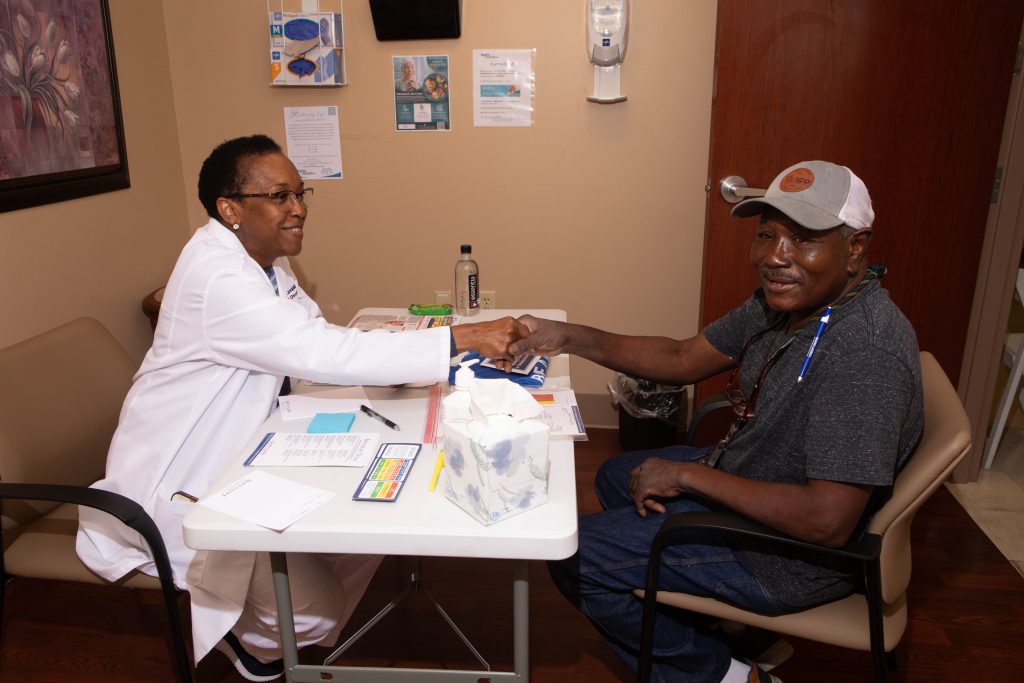
What brings you the most joy as Gift of Life’s Medical Director?
I enjoy teaching – having that personal interaction with people in the community. Every 2nd and 4th Saturday at 8:00 AM I lead Walk with a Doc, and that has really been a gift! Something as simple as walking can have tremendous health benefits. But, beyond that, we are creating community connections that remove the barriers that keep so many people from accessing healthcare. It’s casual, informal, but also fun and lifechanging! I’m so excited about seeing this program grow in the coming year!
Since February is Black History Month, are there any female historical figures from STEM fields that inspired you?
Absolutely! I’m impressed by mathematician Creola Katherine Goble who was an Aerospace Technologist at NASA in the 1950’s. She was so brilliant that she became known as a human computer! Also, one of my medical school classmates, Dr. Sonya Miles Sloan, became the first African American female Orthopedic Surgical resident at Baylor College of Medicine. She has completed several published research projects in Orthopedic Sports Medicine and a joint venture with NASA’s Johnson Space Center. I’m cheering her on!
Seeing these examples must have been very empowering! Do you have any insight on the importance of observing Black History Month?
Even now, we have people of color who feel inferior or “less-than.” From a public health standpoint, it’s challenging to take proper care of yourself if you don’t see yourself as worthy of that care. Black History Month helps people of color take pride in who we are. We know more about what we’re made of and what we’re capable of doing. Just like I experienced in my life, you don’t know what’s possible, until you can see what’s possible.
What possibilities do you wish more people could see?
You know, we’ve talked about friendship and the powerful force it’s been in my life. Certainly, I wouldn’t be where I am without the friendship of Carlette or even the patients who inspired me along the way. But, in medicine, I learned about a different kind of connection – kinship.
When I attended medical school, I was exposed to people of every race, ethnicity, religion, and socioeconomic background. In this rigorous academic environment, we came to rely on each other and form close connections that got us through difficulties. We were all very different. But, through kinship, we learned that we were the same in the ways that mattered most – things like honesty, integrity, goodwill, compassion, and commitment.
That lesson was one of the most valuable ones I received in medical school. Through kinship, we collectively benefit by respecting each other’s differences and building unity through shared connection. Diversity is a strength! It makes all of us better. Let’s be proud of it and celebrate it wherever we can find it!
As a final thought, what advice would you give young women like you dreaming of becoming a doctor?
Be determined and do it! She thought she could; so, she did!
